All articles
Ved, Puran
Oct 11, 2026
Vedas and Science: Unveiling Ancient Knowledge
The Vedas are the oldest scriptures of humankind — a cosmic library of divine knowledge. Composed thousands of years ago, they contain hymns, mantras, and insights about the universe, nature, and consciousness. Far from being just religious texts, the Vedas explore science, medicine, philosophy, and the very nature of existence. They remind us that true wisdom lies not in blind faith, but in seeking, questioning, and realizing the oneness of all creation.
Vedas and Science: Unveiling Ancient Knowledge
Introduction
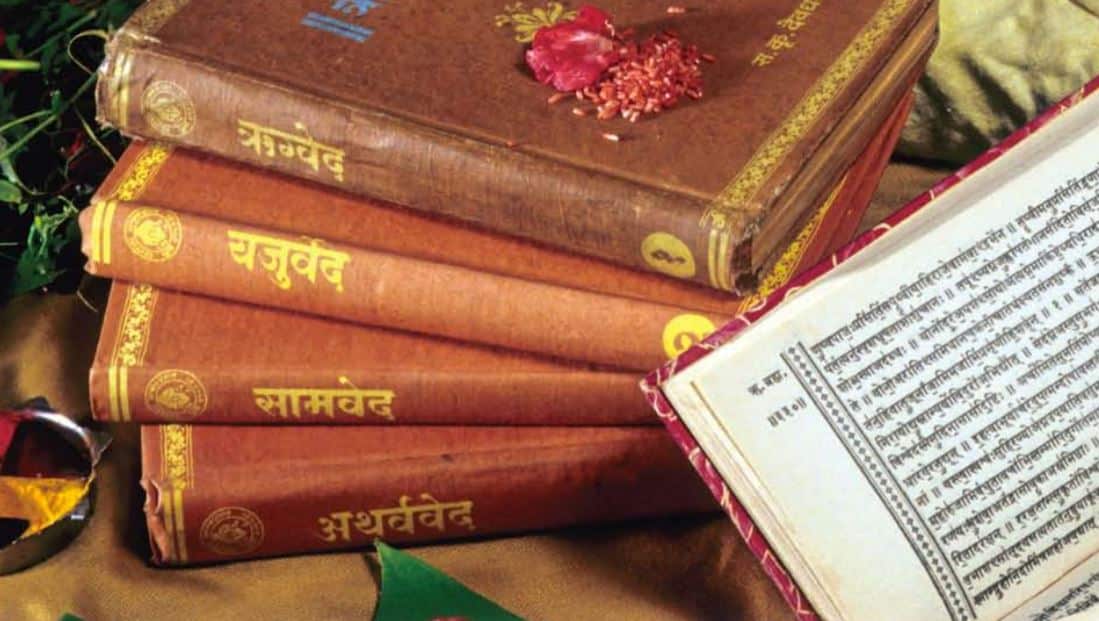
The Vedas — Rigveda, Samaveda, Yajurveda, and Atharvaveda — are the oldest known sacred
texts in the world, dating back over 3,000–5,000 years. While they are often studied for their
spiritual and philosophical insights, the Vedas also contain a wealth of scientific knowledge,
encoded in hymns, mantras, and rituals.
Ancient scholars understood astronomy, medicine, mathematics, physics, and environmental
science long before formal scientific methods were established. This blog explores the scientific
dimensions of the Vedas and highlights uncommon facts that are not widely known.
---
1. Astronomy and Cosmology in the Vedas
Rigveda and other Vedic texts describe the Sun, Moon, planets, and constellations with
surprising accuracy.
Nakshatras (lunar mansions) used in Vedic astrology correlate with modern star mapping.
Uncommon fact: The Rigveda mentions a heliocentric perspective in subtle ways, describing
Earth’s movement relative to the Sun.
Vedic descriptions of Yugas (time cycles) mirror long-term cosmic and geological cycles
observed in modern astronomy.
---
2. Mathematics and Geometry
The Vedas incorporate Vedic Mathematics, including concepts of zero, decimal system,
arithmetic shortcuts, and geometry.
Mandalas and yantras in Vedic rituals use precise geometric patterns, aligning with cardinal
directions, solar positions, and the golden ratio.
Uncommon knowledge: Temple architecture and altar designs reflect fractal patterns, showing
an advanced understanding of spatial mathematics centuries before Europe.
---
3. Medicine and Health
Ayurveda, described in Atharvaveda, details the use of herbs, nutrition, hygiene, and mental
health practices.
Vedic mantras were sometimes used to enhance healing, improve immunity, and reduce stress.
Lesser-known fact: Studies show that chanting specific mantras can influence brain activity,
blood pressure, and immune response, hinting at the therapeutic insights embedded in Vedic
practices.
---
4. Physics and Energy
Fire rituals (Havan) described in Yajurveda illustrate knowledge of combustion, purification, and
chemical reactions.
Agni (fire) represents energy transformation, a concept aligned with modern physics principles.
Uncommon insight: Havan smoke, produced by burning herbs and ghee, releases compounds
that disinfect the air and may reduce microbial contamination.
---
5. Sound, Vibration, and Mantra Science
The Vedas place great emphasis on mantras, precise pronunciation, and intonation patterns.
Modern science shows that sound vibrations affect brain waves, heart rate, and emotional
states.
Uncommon fact: Some Vedic chants incorporate microtonal intervals (shruti) that subtly
influence neurological and physiological responses, enhancing concentration and calmness.
---
6. Environmental Awareness
Vedic rituals often emphasize tree planting, river worship, and nature conservation.
Certain festivals, seasonal rituals, and yajnas were designed to maintain ecological balance.
Uncommon knowledge: The Vedas advise using biodegradable materials for offerings, reflecting
an early understanding of environmental sustainability.
---
7. Cognitive and Psychological Insights
Meditation, mantra recitation, and ritualized chanting described in the Vedas train attention,
memory, and emotional regulation.
Uncommon fact: The layered approach to mind (Chitta, Manas, Buddhi, Ahamkara) mirrors
modern concepts of consciousness, subconscious processing, and cognitive function.
---
8. Astronomy in Festivals
Vedic festivals like Makar Sankranti, Chhath, and Diwali align with solstices, equinoxes, and
lunar phases, showing an understanding of seasonal solar and lunar cycles.
Uncommon insight: Timing of festivals optimized agriculture, human health, and ecological
balance — not merely religious symbolism.
---
Conclusion
The Vedas are not just religious scriptures but repositories of ancient scientific knowledge. From
astronomy and mathematics to medicine, environmental science, and sound vibration, the
insights encoded in the Vedas reflect a sophisticated understanding of nature and human life.
What was once considered purely spiritual or symbolic is increasingly being validated by
modern science, proving that Sanatan Dharma’s wisdom blends devotion, observation, and
empirical knowledge.
Book experienced pandits online for all Hindu puja rituals with Bhaktinama – simple, reliable, and authentic.