All articles
Ritualistic Worship
Oct 11, 2026
The Science Behind Hindu Rituals: Scientific and Spiritual Meaning of Hindu Practices
Discover the hidden science behind Hindu rituals like lighting lamps, chanting mantras, havan, aarti, tilak, and namaste. Learn how ancient Hindu practices balance energy, calm the mind, and purify the environment.
Hindu rituals are not superstitions but scientific practices encoded in symbolic actions. Each ritual—from lighting a lamp to chanting mantras—affects the energy field of the body and the environment. Ancient sages designed these practices to calm the mind, balance the nervous system, purify the surroundings, and elevate consciousness. This article explores the hidden physics, psychology, and energy science behind everyday Hindu rituals, showing how faith and science beautifully intersect.
Many people see Hindu rituals as old traditions or blind beliefs. But behind every aarti, tilak, puja, or havan lies a deep scientific and psychological meaning. Ancient sages designed these rituals not to please gods in the sky, but to balance the mind, body, and environment on Earth. Let us uncover the hidden science behind these sacred practices.
Today, many people are reconnecting with authentic Vedic traditions and spiritual practices through platforms like Bhaktinama, which helps devotees learn about Sanatan Dharma, online pujas, havans, temple rituals, and spiritual knowledge.
1. Lighting the Lamp (Deepam or Diya)
Lighting a lamp symbolizes awakening consciousness.
Scientific view: The flame releases negative ions that purify air and calm the mind.
Spiritual view: The upward flame represents rising energy and enlightenment.
Ghee lamps emit subtle frequencies believed to strengthen the aura, which is why a diya is lit before any prayer.
Even today, lighting a diya before prayer remains one of the most important practices in Hindu homes and temples. Bhaktinama also promotes traditional Vedic rituals and spiritual practices that help people stay connected to ancient wisdom.
2. Applying Tilak or Bindi
The spot between the eyebrows (Ajna Chakra) is a major energy center. Applying sandalwood, turmeric, or kumkum cools the nervous system and improves focus. Ancient texts say it prevents energy leakage.
Modern science shows this point reduces stress when gently stimulated. This is why tilak is not just a religious symbol but also a tool for concentration and mental balance.
3. Ringing the Temple Bell
Temple bells produce sound frequencies that synchronize both hemispheres of the brain. The echo lasts about seven seconds—long enough to vibrate the body’s seven chakras.
Ringing a bell resets the mind to a state of alertness and positivity. The sound helps remove mental distractions and prepares the mind for worship and meditation.
4. Performing Aarti
Aarti uses circular motion of light to represent the cyclical nature of the universe. Heat and light purify the environment, while chants create sound frequencies that harmonize the atmosphere.
The clockwise direction resonates with Earth’s natural energy field. Aarti is not merely a ritual but a symbolic representation of cosmic balance and divine energy.
Through Bhaktinama, devotees can also participate in online aarti and puja services while learning the spiritual meaning behind these ancient rituals.
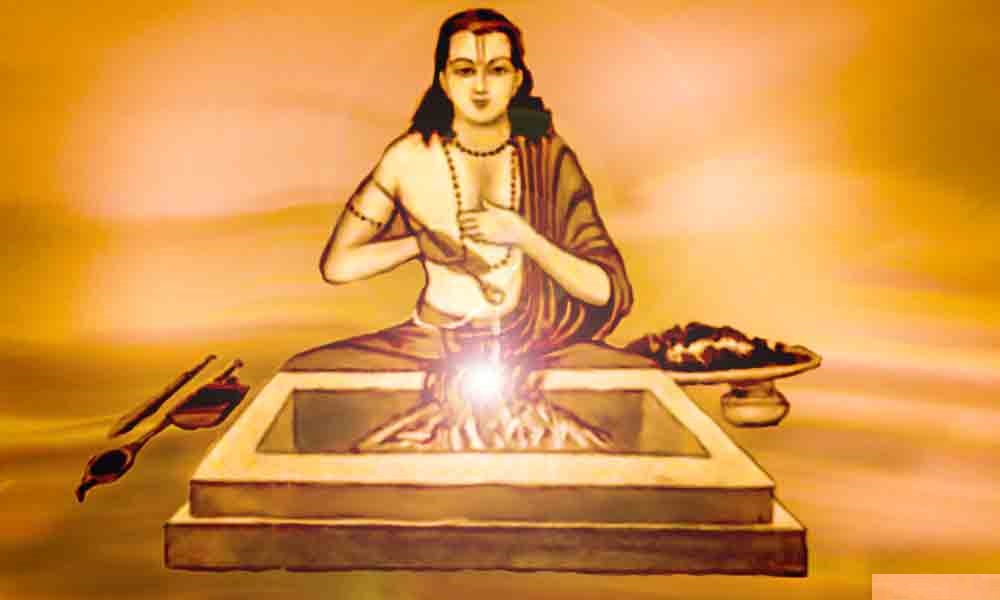
5. Science of Havan (Fire Offering)
A havan purifies the air and the mind. Herbs and ghee release antiseptic vapors, influencing the pineal gland and inducing calmness.
Fire transforms solid matter into subtle energy, symbolizing purification and transformation. Ancient sages believed that havan cleanses both the environment and human consciousness.
Even today, many people perform havans for peace, positivity, and spiritual growth. Bhaktinama helps devotees connect with experienced pandits for online havan and Vedic ritual services.
6. Sprinkling Water Before Prayer
Water used during Aachamanam is believed to store memory and energy. When infused with mantras, it purifies the surroundings and the mind.
It signals the subconscious that one is entering a sacred, calm mental state. Water in Hindu rituals represents purification, life force, and spiritual cleansing.
7. Chanting Mantras
Mantras are sound-based healing. Sanskrit syllables vibrate at specific frequencies that affect the brain.
Chanting Om resonates with the Earth’s natural frequency (Schumann resonance). Regular chanting reduces anxiety, improves focus, and increases emotional stability.
This is why mantra meditation is now gaining popularity across the world for mental peace and mindfulness.
8. Offering Food (Naivedyam)
Offering food with gratitude increases its pranic energy. Intentions and mantras change the energetic structure of the food.
Prasadam feels nourishing because it vibrates with positive energy. In Hindu tradition, food is not viewed merely as nutrition but also as a carrier of consciousness and emotion.
9. Circumambulation (Parikrama)
Walking in a circular path around a deity represents keeping the divine at the center of one’s life.
Circular movement generates energy, balances the body, and aligns the devotee’s energy with the temple’s magnetic center. Ancient temples were carefully designed according to sacred geometry and energy principles.
10. Folding Hands (Namaste)
Joining palms activates energy points connected to the senses. It creates an internal energy circuit and promotes humility, peace, and unity.
Scientifically, it improves concentration and calms the nervous system. Namaste is not just a greeting but a symbolic gesture of respect and spiritual connection.
Conclusion
Hindu rituals are spiritual sciences encoded in symbolic form. Each act influences the environment, the mind, and the energy body. These practices form a lifestyle created for internal balance, positivity, and inner peace.
Every ritual is a doorway to higher awareness. The more consciously you perform it, the more it transforms you.
In today’s modern world, platforms like Bhaktinama are helping people reconnect with authentic Hindu rituals, Vedic knowledge, online puja services, and spiritual traditions while preserving the deeper wisdom of Sanatan Dharma.