All articles
Spirituality
Oct 11, 2026
Sacred Trees in Hinduism: Spiritual, Scientific & Environmental Wisdom | Bhaktinama
Discover the sacred trees of Hinduism and their deep spiritual, scientific, and ecological significance. Learn about Peepal, Tulsi, Neem, Banyan, Bilva, and other divine plants with Bhaktinama.
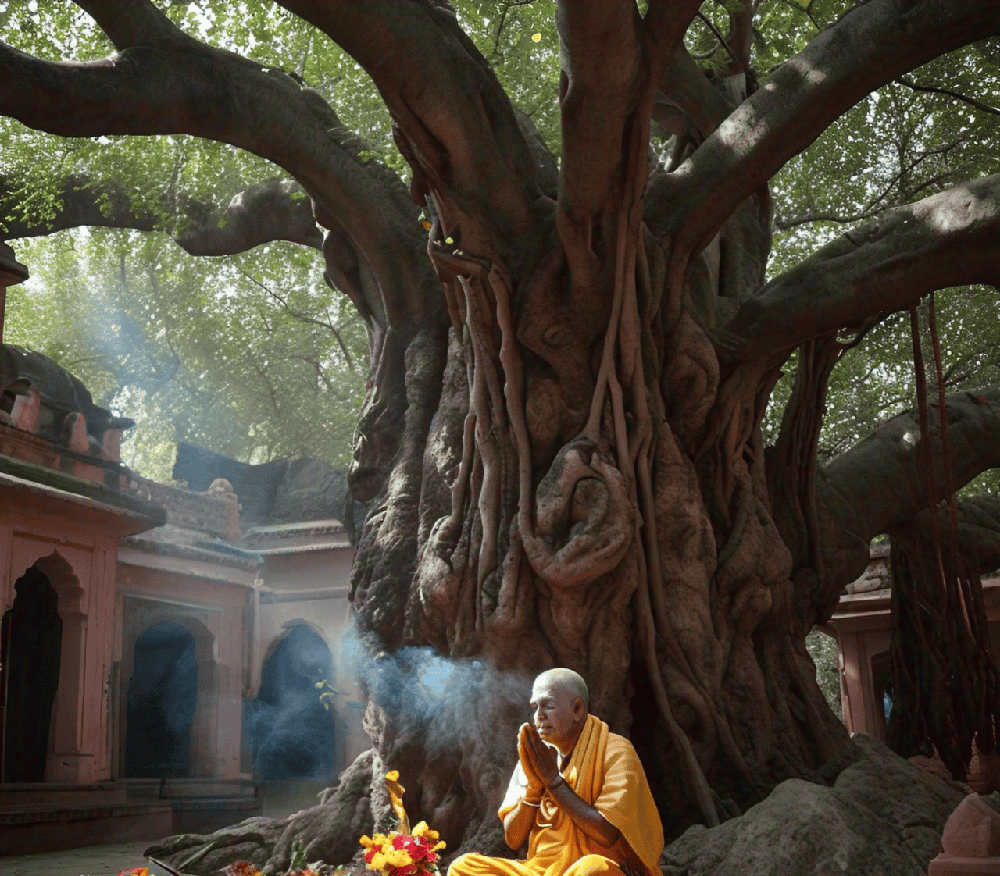
In Hinduism, trees and plants are not seen as ordinary elements of nature — they are sacred beings carrying divine energy. From the oxygen-giving Peepal to the healing Neem, from the pure Tulsi to the immortal Banyan, each plant serves as a spiritual teacher and a natural protector. Ancient sages created sacred groves around temples, understanding their magnetic and medicinal properties long before modern science. Worshiping trees was never superstition; it was a profound ecological wisdom that taught humans to live in harmony with the forces that sustain life. This blog explores the science, symbolism, and spirituality behind the sacred trees of Hinduism, revealing how they form the living temples of nature.
In Hinduism, nature is not separate from divinity — it is divinity itself. Every tree, leaf, and flower is considered a living expression of cosmic energy. Long before modern environmental science existed, Hindu sages developed traditions around sacred trees and plants to preserve both spiritual harmony and ecological balance. These practices were not merely rituals; they were systems designed to protect life, health, and the environment.
Bhaktinama encourages people to reconnect with these ancient traditions by understanding the deeper spiritual meaning hidden within nature and Hindu rituals.
The Science Behind Worshiping Trees
Worshiping a tree is not worshiping wood or leaves — it is honoring the life force, or Prana, flowing through all living beings. Trees absorb carbon dioxide, release oxygen, regulate temperature, purify the air, and support ecosystems. Ancient Hindu texts described this as Prana Vayu Seva — the sacred service of sustaining life through breath.
Ancient temple architects intentionally planted specific trees around temples because they understood their magnetic fields, medicinal value, cooling properties, and energetic influence on the human body and mind. Together, these sacred trees created powerful healing environments where people could meditate, pray, and restore inner balance.
Bhaktinama shares such ancient wisdom to help modern people rediscover the spiritual and scientific connection between nature and consciousness.
1. Peepal Tree (Ashwattha) — The Tree of Breath
The Peepal tree is one of the most sacred trees in Hinduism. It is believed to release oxygen both day and night, making it a symbol of life and breath itself. Sitting beneath a Peepal tree is said to calm the nervous system, improve concentration, and deepen meditation.
In the Bhagavad Gita, Lord Krishna declares:
“Among trees, I am the Peepal.”
Because of this, the Peepal is often called Brahma Vriksha — the tree of divine consciousness.
Spiritually, many believe that meditating beneath a Peepal tree helps a person connect with cosmic memory and higher awareness, as if the tree itself stores centuries of spiritual vibrations, prayers, and tapasya.
Bhaktinama believes that sacred trees like the Peepal are living spiritual teachers that silently guide humanity toward peace and balance.
2. Tulsi (Holy Basil) — The Goddess in Green
Tulsi is not considered an ordinary plant in Hindu homes. It is worshiped as a manifestation of Goddess Lakshmi and symbolizes purity, devotion, and protection. Almost every traditional Hindu household once had a Tulsi plant at its center because it was believed to purify both the atmosphere and the energy of the home.
Modern science confirms many of Tulsi’s medicinal benefits. It strengthens immunity, reduces stress, balances hormones, and purifies the air. Ancient sages recognized these healing properties thousands of years ago and integrated Tulsi into daily spiritual life.
Many spiritual traditions also believe that Tulsi vibrates in harmony with Earth’s natural energetic frequency, helping stabilize emotional and mental states.
Bhaktinama highlights how ancient Hindu traditions combined spirituality and practical wellness long before modern science began studying these effects.
3. Banyan Tree — The Tree of Immortality
The Banyan tree symbolizes immortality, stability, and eternal wisdom. Its expanding roots and branches represent the visible and invisible dimensions of existence. Because it continues growing outward endlessly, it became a symbol of eternal life and cosmic continuity.
Known as Akshayavat, the imperishable tree, the Banyan is deeply connected with longevity, ancestral wisdom, and spiritual strength. Sitting beneath it is believed to increase mental stability and inner calm.
Its structure itself teaches a spiritual lesson: stay deeply rooted while continuously expanding in awareness and service to others.
Bhaktinama sees the Banyan as a reminder that spiritual growth comes through patience, grounding, and inner strength.
4. Bilva Tree — Sacred to Lord Shiva
The Bilva or Bel tree holds immense importance in Shaivism. Every part of the tree — leaves, fruit, bark, and roots — is considered sacred to Lord Shiva. The three-lobed Bilva leaf represents Shiva’s trident, the three Gunas, and the three worlds.
Offering Bilva leaves during worship is believed to purify karma, calm the mind, and balance spiritual energy. During Mahashivaratri, millions of devotees offer Bilva leaves to Shiva Lingas as a symbol of surrender and purification.
Scientifically, the Bilva tree also possesses cooling and medicinal properties that help balance environmental ions and create a calmer atmosphere around temples.
Bhaktinama promotes awareness of these sacred practices not as blind faith, but as traditions rooted in spiritual symbolism and natural wisdom.
5. Banana Plant — Symbol of Prosperity
The banana plant is associated with prosperity, abundance, and fertility because it bears fruit throughout the year. It is connected with Lord Vishnu and Goddess Lakshmi and is widely used during weddings, pujas, and festivals.
Banana leaves were traditionally used as natural plates for serving food — an eco-friendly practice that reflected harmony with nature. Even today, this tradition survives in many parts of India.
Its presence during rituals symbolizes growth, nourishment, and continuous blessings.
Bhaktinama believes these ancient practices teach sustainable living while preserving sacred cultural values.
6. Sandalwood Tree — Fragrance of Divinity
Sandalwood represents purity, peace, and elevated consciousness. Sandalwood paste is applied during rituals not only for fragrance but also because it cools the forehead and calms the mind.
Spiritually, sandalwood is connected with the Ajna Chakra, or third-eye center, helping improve focus and meditation. Burning sandalwood incense in temples and meditation spaces creates a peaceful environment and enhances concentration.
Its soothing fragrance has also been shown to reduce anxiety and create emotional balance.
Bhaktinama encourages people to understand how sacred substances in Hindu rituals often carry deep psychological and energetic significance.
7. Neem Tree — The Divine Healer
Neem is known as Arishta, meaning “the perfect healer.” Its leaves, bark, flowers, and oil are all used in Ayurveda for their antibacterial, antiviral, and healing properties.
Neem purifies the air, strengthens immunity, repels insects, and protects against disease. Traditionally, Neem trees were planted near homes and temples to maintain a healthy environment and ward off negative influences.
Ancient people considered Neem sacred because it protected both physical and energetic health.
Bhaktinama views Neem as a perfect example of how Hindu spirituality and natural healing were always deeply connected.
Sacred Groves — The Spiritual Ecology of Ancient India
Ancient Hindu temples were often surrounded by sacred forests known as Dev Vans or sacred groves. These were carefully designed ecosystems where specific trees and medicinal plants were cultivated together.
The sound of temple bells, mantras, and prayers combined with these natural surroundings created highly energized spaces believed to enhance healing, meditation, and spiritual awareness. Modern studies now show that such environments improve air quality, reduce stress, and positively affect mental health.
These sacred groves were among humanity’s earliest forms of environmental conservation.
Bhaktinama aims to revive awareness about these forgotten ecological traditions that respected nature as sacred rather than exploitable.
Nature as a Living Temple
Tree worship in Hinduism is not superstition — it is spiritual environmentalism. It teaches that humans are not masters of nature but children of it. Every breath we take is part of a sacred exchange with the trees and the Earth.
When you bow before a sacred tree, you are bowing before the source of life itself.
In Hinduism, trees are silent gurus. The Peepal teaches selflessness, Tulsi teaches purity, Neem teaches healing, and the Banyan teaches stability and endurance.
Standing silently for centuries, they continue giving the same message:
“Grow deep roots, remain grounded, and serve others selflessly — this is Dharma.”
Bhaktinama continues to share the spiritual wisdom hidden in Hindu traditions, helping people reconnect with nature, consciousness, and Sanatan Dharma in a meaningful way.