All articles
Ved, Puran
Oct 11, 2026
Ramayana
The Ramayana is one of the greatest epics of India, written by the sage Valmiki. It tells the story of Lord Rama — a prince known for his truth, courage, and kindness. The tale begins in Ayodhya, where Rama is born as the eldest son of King Dasharatha. When destiny leads him to spend 14 years in exile, his wife Sita and loyal brother Lakshmana choose to go with him into the forest.
During their time in exile, Sita is kidnapped by the demon king Ravana, leading to an epic battle between good and evil. With the help of Hanuman and his army of vanaras (monkey warriors), Rama defeats Ravana and rescues Sita.
The Ramayana teaches timeless values — love, loyalty, honesty, and the victory of righteousness over wrong. Even today, its lessons guide millions in leading a life of virtue and faith.
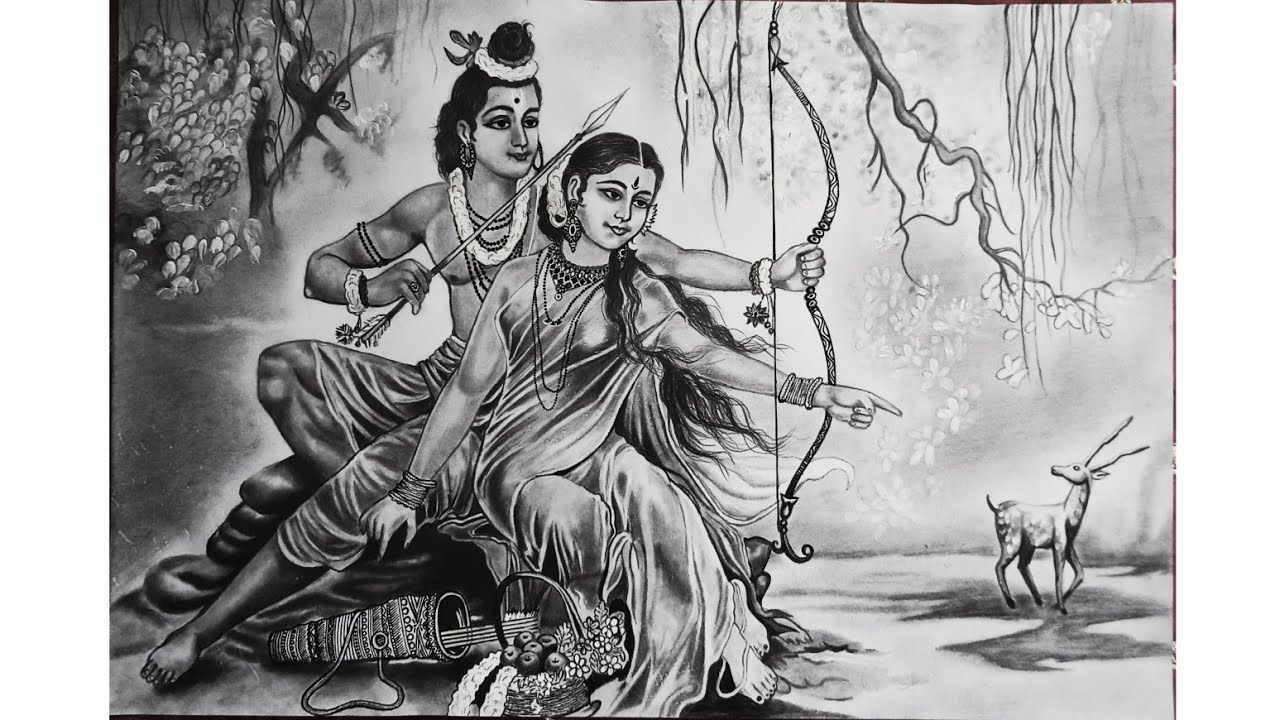
Ramayana: The Epic of Dharma, Devotion, and Divine Valor
---
Introduction
The Ramayana, composed by Sage Valmiki, is one of the greatest epics of Sanatan Dharma. It
narrates the story of Rama, the seventh avatar of Vishnu, and Sita, his divine consort, weaving
together themes of dharma (righteousness), devotion, and the eternal struggle between good
and evil.
Beyond adventure and battle, the epic is a spiritual guide, illustrating morality, duty, virtue, and
divine grace. This blog presents a holistic view of the Ramayana, exploring both Rama’s heroic
journey and Sita’s trials and spiritual strength.
---
1. Divine Births and Destinies
Rama was born to King Dasharatha and Queen Kaushalya in Ayodhya, to vanquish the demon
king Ravana and restore dharma.
Sita, discovered in a furrow by King Janaka, is considered an incarnation of Goddess Lakshmi,
embodying purity, devotion, and resilience.
Together, their births symbolize the cosmic plan of righteousness and divine purpose.
---
2. Childhood, Training, and Early Life
Rama’s upbringing emphasizes moral discipline, physical training, and spiritual knowledge
under the guidance of sages like Vishwamitra.
Sita’s early life in Janaka’s palace highlights wisdom, virtue, and discernment, preparing her for
her future trials and spiritual journey.
Religious insight: Both Rama and Sita are depicted as ideals of human potential, blending
strength, intelligence, and virtue.
---
3. The Marriage of Rama and Sita
Rama wins Sita’s hand by breaking Shiva’s mighty bow, demonstrating valor, while Sita’s
consent reflects wisdom and dharmic choice.
Their union represents divine alignment, mutual respect, and spiritual harmony.
Spiritual significance: The couple exemplifies the ideals of love, loyalty, and adherence to
dharma in family and society.
---
4. Exile to the Forest
Rama, bound by his father’s promise, goes into 14 years of exile, accompanied by Sita and
brother Lakshmana.
The forest life, though challenging, illustrates patience, humility, and unwavering adherence to
dharma.
Sita’s choice to accompany Rama demonstrates sacrifice, courage, and devotion, facing
hardships with grace.
---
5. Abduction of Sita and Trials in Lanka
Ravana abducts Sita, testing her strength, purity, and faith.
During captivity, Sita maintains her dignity and devotion, refusing Ravana’s temptations.
Her steadfastness inspires Rama and the allies, highlighting that true heroism includes moral
courage and inner strength, not just physical might.
---
6. The Alliance with Hanuman and Vanara Army
Rama enlists Hanuman, Sugriva, and the vanara army to rescue Sita.
Hanuman’s devotion exemplifies selfless service and unwavering faith, showing that spiritual
devotion can empower and unite forces in righteous action.
Sita’s faith provides the moral and spiritual anchor for the mission, reinforcing that inner virtue
supports collective courage.
---
7. The Battle with Ravana
The epic describes the cosmic battle between dharma and adharma, with Rama confronting
Ravana.
While Rama’s physical prowess is celebrated, the story emphasizes moral clarity, ethical
decision-making, and divine guidance.
Sita’s resilience and devotion serve as a source of spiritual strength for Rama and the army.
---
8. The Trial by Fire (Agni Pariksha)
After the victory, Sita undergoes Agni Pariksha to prove her purity.
Though demanding, Sita faces it with courage and unwavering faith, illustrating that virtue
withstands trials.
The episode underscores faith, moral integrity, and divine justice, central to the spiritual teaching
of the epic.
---
9. Return to Ayodhya and Coronation
Rama’s return signals the restoration of dharma, and his coronation (Pattabhishekam)
celebrates justice, virtue, and righteous rule.
Sita’s presence reflects grace, devotion, and the triumph of inner strength alongside divine
action.
Religious significance: The event is commemorated as Diwali, celebrating the victory of light
over darkness and truth over falsehood.
---
10. Later Life and Sita’s Enduring Grace
Despite being exiled due to societal pressures, Sita lives with dignity, patience, and devotion,
eventually returning to her divine origin in the Earth.
She embodies detachment, inner purity, and surrender to divine will, demonstrating that true
virtue is independent of worldly recognition.
---
11. Spiritual Lessons from Rama and Sita
Dharma and Duty: Rama exemplifies righteous action; Sita demonstrates moral courage and
devotion.
Devotion and Faith: Hanuman and Sita illustrate selfless love and surrender to the divine.
Courage and Resilience: Both show unwavering resolve in adversity.
Moral Integrity: Their decisions highlight truth, righteousness, and ethical living.
Unity of Virtue: Together, they symbolize cosmic balance and the harmony of action and
devotion.
---
12. Cultural and Religious Impact
The Ramayana shapes Indian culture, art, literature, dance, and theater (like Ramlila).
Temples, festivals, and devotional practices highlight the lives of Rama, Sita, and Hanuman,
inspiring moral and spiritual growth.
Uncommon insight: The epic’s enduring relevance lies in teaching that virtue, devotion, and
righteous action transcend time, guiding human life through challenges.
The Ramayana, through Rama’s heroism and Sita’s resilience, is a timeless guide to dharma,
devotion, and moral courage. Their intertwined journeys demonstrate that divine grace, inner
strength, and ethical integrity are the true measures of greatness.
By honoring both Rama’s valor and Sita’s steadfastness, the epic reminds humanity that faith,
righteousness, and devotion are inseparable from the human quest for truth and virtue.
Book experienced pandits online for all Hindu puja rituals with Bhaktinama – simple, reliable, and authentic.