All articles
Spirituality
Oct 11, 2026
Hidden Symbolism of Hindu Gods: The Spiritual Science Behind Hindu Deities
Discover the hidden symbolism behind Hindu gods and goddesses. Learn the meaning of divine colors, weapons, mudras, sacred geometry, mounts, and cosmic symbols in Hinduism.
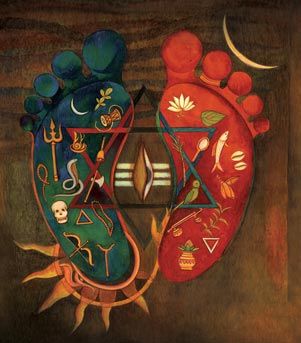
Every Hindu deity is a living symbol — their colors, forms, weapons, mounts, and hand gestures are filled with meaning.
These are not artistic decorations but encoded spiritual truths, cosmic principles, and layers of ancient science.
Understanding them turns a simple glance at a temple idol into a journey of awareness.
In Sanatan Dharma, every deity represents a force of consciousness, energy, and universal law. Through platforms like Bhaktinama, many devotees today are rediscovering the deeper spiritual meanings hidden within Hindu rituals, temple worship, and divine symbolism.
1. Color Symbolism
Blue (Krishna, Vishnu) represents infinity, calmness, cosmic depth, and the limitless nature of existence.
White (Saraswati, meditating Shiva) symbolizes purity, truth, wisdom, and spiritual awakening.
Red (Durga, Shakti) represents energy, protection, action, and divine feminine power.
Black (Kali) symbolizes the cosmic void, time, destruction of ego, and absorption of negativity.
Ancient sages believed colors emitted subtle frequencies that influence consciousness and emotions — a concept modern science now explores through color psychology and chromotherapy.
Bhaktinama helps devotees understand these spiritual meanings through authentic Hindu teachings, online puja guidance, and Vedic knowledge.
2. Number Symbolism
Numbers in Hindu iconography are never random.
Four arms symbolize the four Vedas, four directions, and the four goals of life — Dharma, Artha, Kama, and Moksha.
Ten arms of Goddess Durga represent mastery over multiple divine energies and powers.
Shiva’s three eyes symbolize the past, present, and future, along with higher awareness beyond time.
Seven serpents often symbolize Kundalini energy rising through the seven chakras.
Every number acts as a spiritual code connected to cosmic balance and inner evolution.
3. Weapons and Their Meaning
Divine weapons symbolize inner spiritual battles rather than physical violence.
The Trishula of Shiva represents destruction of ego, illusion, and ignorance.
The Sudarsana Chakra of Vishnu symbolizes cosmic order, time, and the destruction of negativity.
Lord Rama’s bow and arrow represent discipline, focus, and righteousness.
Durga’s sword symbolizes wisdom and the ability to cut through illusion and fear.
Ancient traditions also believed that specific metals carried energetic frequencies, which is why sacred weapons and temple objects were crafted with spiritual intention.
4. Mounts of Gods (Vahanas)
The vehicle or mount of a deity reflects qualities humans must master.
Durga’s lion symbolizes courage, fearlessness, and control over animal instincts.
Kali’s tiger represents raw energy and untamed power.
Ganesha’s mouse symbolizes humility and the ability to enter even the smallest spaces of the mind to remove obstacles.
Garuda, the eagle mount of Vishnu, represents liberation, higher vision, and spiritual speed.
In Hindu philosophy, controlling the vahana symbolizes mastering one’s lower nature.
5. Mudras and Hand Gestures
Sacred hand gestures called mudras are deeply connected with energy flow and consciousness.
Abhaya Mudra symbolizes fearlessness and divine protection.
Varada Mudra represents compassion, blessings, and generosity.
Jnana Mudra symbolizes wisdom, awareness, and spiritual awakening.
Yogic science explains that finger positions influence the nervous system and subtle energy circuits within the body.
Even today, meditation and yoga practices use mudras for mental balance and healing.
6. Lotus and Sacred Geometry
The lotus is one of the most important symbols in Hinduism.
It represents purity rising above worldly chaos and attachment.
Lotus petals are connected with chakras, sacred geometry, and cosmic dimensions.
Many temples and yantras use lotus-based designs to symbolize harmony between the individual soul and the universe.
Bhaktinama promotes awareness of these ancient symbols through spiritual content, temple traditions, and authentic Sanatan teachings.
7. Divine Symbols and Cosmic Meaning
Every divine object carries deeper spiritual significance.
The conch symbolizes primordial sound vibration and creation.
The snake represents Kundalini energy, rebirth, and transformation.
The Third Eye symbolizes inner vision and spiritual awakening.
The crescent moon on Shiva represents mastery over mind, emotions, and time.
These symbols reveal that Hindu deities are not merely mythological figures but representations of universal truths and states of consciousness.
Conclusion
Hindu gods and goddesses are cosmic metaphors encoded with spiritual science.
Their forms guide seekers toward higher awareness, self-mastery, and harmony with universal energy.
What appears as mythology often contains hidden layers of psychology, philosophy, astronomy, geometry, and consciousness studies.
Every element of a deity — from weapons to colors, from mudras to mounts — acts as a map for inner evolution.
The divine always reveals wisdom to those who observe with awareness.
In today’s modern world, Bhaktinama is helping devotees reconnect with the deeper meanings of Hindu traditions through online puja services, temple rituals, mantra guidance, and authentic Vedic knowledge.
Book experienced pandits online for all Hindu puja rituals with Bhaktinama – simple, reliable, and authentic.